May 15, 2026Case Studies
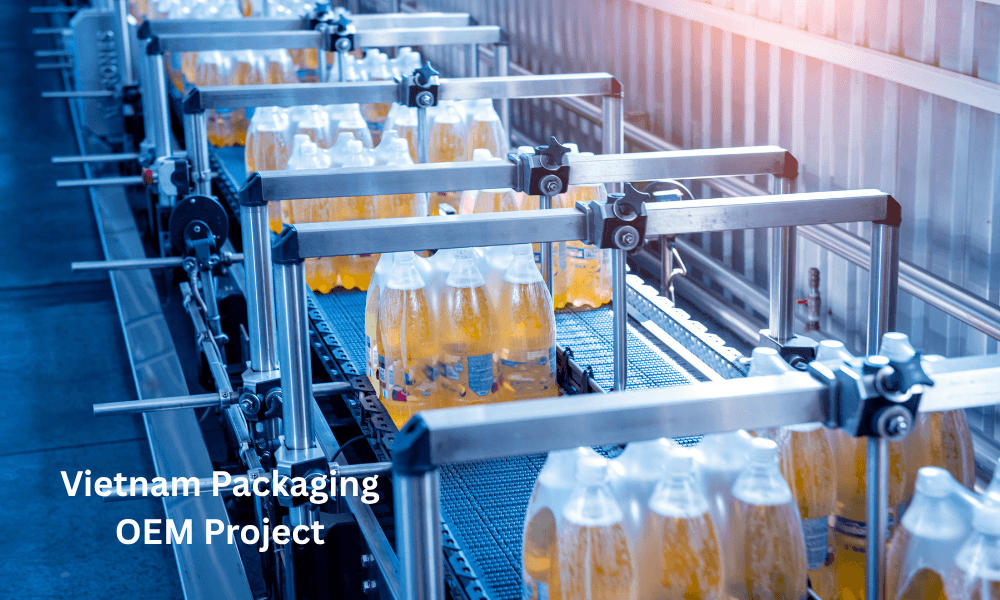
Vietnam Packaging OEM Project
What Actually Happened When a Packaging Brand Moved Part of Its Supply Chain From China to Vietnam Over the last three years, one topic has appeared repeatedly across sourcing forums, procurement grou
What Actually Happened When a Packaging Brand Moved Part of Its Supply Chain From China to Vietnam
Over the last three years, one topic has appeared repeatedly across sourcing forums, procurement groups, and Reddit manufacturing communities:
“Should we move production from China to Vietnam?”
At first glance, the answer often sounds obvious. Vietnam offers lower labor costs, expanding manufacturing capacity, and increasing trade advantages for companies selling into North America and Europe. Many brands see headlines about “China Plus One” strategies and assume shifting production is mainly a procurement decision.
In reality, it is rarely that simple.
The companies that succeed usually discover that moving production is not really about finding a cheaper factory. It is about rebuilding an entire operating system: supplier communication, engineering support, quality control, lead-time management, compliance verification, and risk visibility all need to be redesigned almost from the ground up.
This case study explains how we helped a mid-sized food packaging brand partially transition flexible packaging production from Southern China to Vietnam while maintaining delivery reliability, retail quality standards, and food-contact compliance across multiple export markets.
More importantly, it explains the problems that almost derailed the transition, the hidden operational costs that did not appear in the original spreadsheets, and the systems we implemented to stabilize the supply chain before the customer experienced serious downstream damage.
Why the Customer Started Looking Outside China
The customer was a growing snack brand supplying retailers and e-commerce distributors across the United States and parts of Western Europe. Their original supply chain had been heavily concentrated in Guangdong province for nearly seven years.
At the beginning, that structure worked extremely well.
The Chinese suppliers offered:
- Fast engineering response
- Stable print quality
- Mature packaging infrastructure
- Predictable logistics
- Strong machine capability
However, beginning around 2021–2022, several operational pressures started accumulating simultaneously.
The customer experienced:
Operational Pressure | Business Impact |
|---|---|
Rising labor costs | Higher packaging unit prices |
Energy cost fluctuations | Increased production volatility |
Tariff uncertainty | Margin pressure |
Longer booking cycles | Slower inventory turnover |
High MOQs | Excess packaging inventory |
Supplier concentration risk | Limited contingency options |
At the same time, competitors had already started discussing Vietnam sourcing strategies publicly across sourcing communities and FBA seller forums.
According to data from the World Bank and Vietnam’s General Statistics Office, Vietnam’s manufacturing sector has expanded rapidly over the past decade, especially in packaging, electronics, furniture, and consumer products.
From the customer’s perspective, the logic seemed straightforward:
If production costs could be lowered while maintaining acceptable quality levels, partial relocation might improve both profitability and long-term supply chain resilience.
What they underestimated initially was how many operational assumptions were silently embedded inside their existing China supply chain.
The financial model looked attractive—until we added the hidden costs

The first phase of the project focused entirely on cost modeling.
On paper, Vietnam immediately looked attractive.
Average labor costs in Vietnam remain significantly lower than many manufacturing regions inside coastal China. According to JETRO and multiple regional manufacturing studies, Vietnam’s factory labor costs can range between 30 and 50% lower depending on industry segment and location.
Once we modeled the initial numbers, the projected direct packaging cost reduction looked substantial.
Initial Cost Comparison
Category | China | Vietnam | Short-Term Observation |
|---|---|---|---|
Direct Labor | Higher | Lower | Vietnam's advantage |
MOQ Flexibility | Moderate | More flexible | Better for DTC brands |
Tooling Cost | Similar | Similar | Minimal difference |
Utilities | Stable | Slightly variable | Region-dependent |
Logistics Infrastructure | Extremely mature | Improving rapidly | China still stronger |
Engineering Support | Highly experienced | Mixed by supplier | Critical risk area |
Material Ecosystem | Very mature | Partially import-dependent | Important hidden cost |
The customer initially focused heavily on the labor savings.
That is normal.
Most buyers do.
However, after deeper analysis, we discovered several categories of hidden operational costs that were not obvious during early procurement discussions.
The Hidden Costs Nobody Talks About Publicly
1. Increased Supplier Management Time
The China suppliers already understood the customer’s standards intuitively after years of cooperation.
The Vietnam suppliers did not.
That meant:
- More engineering clarification
- More production supervision
- More approval cycles
- More sample revisions
The operational workload increased immediately.
2. Material Dependency Problems
Many Vietnam packaging suppliers still import portions of their raw materials from China, especially specialized films, inks, adhesives, and machine parts.
This created indirect dependency risks the customer had not anticipated.
In several cases, the supply chain was not truly leaving China. It was simply becoming less visible.
3. Quality Stabilization Period
The first few production cycles showed significantly higher variation than the mature Chinese production lines.
This was not because the factories were “bad.”
It was because process stability takes time.
The customer later admitted that this adjustment period was psychologically harder than expected.
Why Factory Selection Became the Most Important Part of the Entire Project
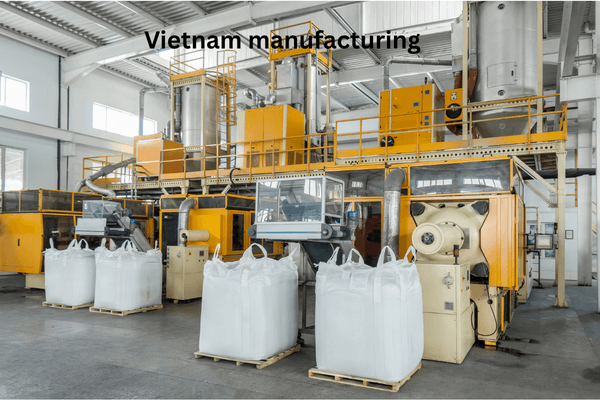
One misconception I see frequently online is the idea that “Vietnam manufacturing” is one consistent category.
It is not.
Factory capability varies enormously.
Some facilities operate with extremely modern equipment and disciplined production systems. Others still struggle with preventive maintenance, process standardization, and documentation control.
That variability creates major sourcing risk.
For this reason, we designed a three-stage supplier evaluation process before approving any production transfer.
Stage One: Qualification Screening
Before visiting any factory, we reviewed:
- Export history
- Existing multinational customers
- Food-contact certifications
- Financial stability
- Production capacity
- Machine configuration
- ERP and traceability systems
Several suppliers were removed immediately.
One company presented strong marketing materials online but could not provide stable batch traceability documentation during review.
That alone represented a major compliance risk for food packaging exports.
Stage Two: Physical Factory Audit
This stage revealed far more than paperwork ever could.
During onsite audits, we evaluated:
Audit Area | Why It Mattered |
|---|---|
Production flow | Prevented contamination and confusion |
Material storage | Controlled humidity and degradation |
Machine maintenance | Reduced downtime risk |
Operator turnover | Affected consistency |
Color management | Critical for retail packaging |
QA documentation | Indicated process maturity |
One factory looked excellent during virtual meetings.
Inside the actual workshop, we found inconsistent raw material labeling and weak environmental controls near the lamination area.
Those issues rarely appear in quotations or presentations.
But over time, they directly affect print stability, sealing consistency, and product shelf appearance.
That supplier was rejected.
Stage Three: Controlled Trial Production
This stage became the real turning point.
Before authorizing mass production, we conducted pilot manufacturing runs under monitored conditions.
The testing process included:
- Seal integrity analysis
- Color delta measurements
- Transportation simulation
- Lamination adhesion testing
- Shelf-life evaluation
- Batch consistency checks
The first trial run exposed several problems immediately.
The Biggest Early Problem: Color Drift
The customer’s retail packaging relied heavily on color consistency because shelf recognition was critical for repeat customers.
The first Vietnam production run showed noticeable color variation between batches.
Technically, the packaging still passed inspection.
Commercially, it was unacceptable.
According to studies from Xerox and Pantone-related packaging research, consumers strongly associate color consistency with perceived brand quality and trust.
At this point, many sourcing projects fail emotionally.
The buyer begins doubting the supplier.
The supplier feels blamed unfairly.
Communication becomes defensive.
Instead of abandoning the project, we rebuilt the print approval workflow entirely.
How We Stabilized Quality Without Losing the Cost Advantage

The customer originally believed quality control mainly meant “final inspection.”
That approach almost never works for packaging manufacturing.
By the time defects appear during final inspection, the operational damage has usually already happened.
Instead, we redesigned the quality system around layered process control.
The Multi-Layer QC Structure
Incoming Quality Control (IQC)
Raw materials were tested before entering production.
This included:
- Film thickness verification
- Ink viscosity checks
- Adhesive consistency review
First Article Inspection (FAI)
The first approved production samples established baseline standards for the following:
- Color reference
- Seal strength
- Registration alignment
- Surface finish
In-Process QA Monitoring
This became the most important improvement.
Instead of relying entirely on post-production checks, local QA engineers monitored live production continuously.
They tracked:
QA Monitoring Area | Operational Goal |
|---|---|
Temperature stability | Prevent sealing inconsistency |
Tension control | Avoid print distortion |
Registration alignment | Improve visual consistency |
Defect frequency | Detect drift early |
Lamination bonding | Prevent delamination issues |
The difference became measurable, surprisingly quickly.
Six-Month Results
KPI | Before QA Optimization | After Stabilization |
|---|---|---|
Customer return rate | 3.2% | 0.4% |
Print inconsistency complaints | Frequent | Rare |
Batch rejection frequency | High | Significantly reduced |
Emergency rework events | Common | Minimal |
The customer later told us something interesting during a quarterly review.
They said the most valuable improvement was not actually lower cost.
It was operational confidence.
Once they trusted the process stability, procurement decisions became much easier internally.
MOQ Flexibility Turned Out to Be More Valuable Than Unit Cost Savings
One unexpected insight from the project was how strongly MOQ flexibility affected the customer’s business model.
Originally, their larger China suppliers preferred long production runs and larger order quantities.
That created hidden financial pressure.
The customer often carried excess packaging inventory simply because MOQs were too high.
This slowed.
- Packaging redesign cycles
- Seasonal product launches
- SKU experimentation
- Regional testing campaigns
To solve this, we redesigned production scheduling around smaller batch structures.
The Production Strategy
We implemented:
- Shared material planning
- Shorter synchronized print runs
- Staggered production scheduling
- Partial inventory reservation systems
This reduced the MOQ from
- 5,000–10,000 units per SKU to:
- 1,000–2,000 units per SKU
That change dramatically improved operational flexibility for the client’s marketing team.
Ironically, this flexibility eventually created more commercial value than the original labor savings discussion.
Sustainability Became a Strategic Sales Tool, Not Just a Compliance Topic
At the beginning of the project, sustainability was treated mostly as a secondary requirement.
That changed once the client started presenting updated packaging concepts to European retail buyers.
Retailers increasingly requested the following:
- Recyclable structures
- Compostable materials
- Reduced solvent usage
- Improved environmental documentation
According to McKinsey consumer research, more than 60% of consumers now say sustainability influences purchasing decisions, especially in food and packaged-goods categories.
We eventually helped the customer develop the following:
- PLA compostable pouch options
- Recyclable mono-material packaging
- Lower-solvent print systems
The commercial response exceeded expectations.
Retail feedback improved noticeably because sustainability messaging aligned better with the customer’s target demographics.
What started as a sourcing project gradually became part of the brand positioning strategy itself.
Final Outcome: What the Customer Actually Gained
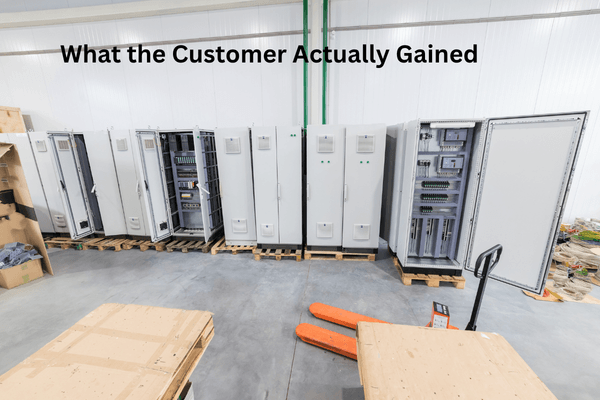
After roughly eight months of supplier onboarding, process redesign, and QA stabilization, the supply chain transition reached operational stability.
The final outcomes looked like this:
Operational Metric | Result |
|---|---|
Average unit cost reduction | 14% |
MOQ reduction | Up to 80% lower |
Customer return rate | Reduced from 3.2% to 0.4% |
Production lead time | Stabilized at 6–8 weeks |
Supplier diversification | Reduced overdependence on one region |
However, the most important outcome was not purely financial.
The customer built a more resilient supply chain architecture.
That distinction matters.
Because the companies succeeding in Southeast Asia today are usually not the ones chasing the absolute cheapest quote.
They are the ones building systems capable of surviving uncertainty over the long term.
Conclusion
Moving packaging production from China to Vietnam can create meaningful cost advantages and operational flexibility, but sustainable success depends far more on supplier qualification, process control, QA systems, compliance discipline, and long-term supply chain visibility than on labor savings alone.
Related Posts: