May 23, 2026Case Studies
Why an Outdoor Enclosure Failed After Installation
Why an Outdoor Enclosure Failed After Installation — and What Was Missed Before Shipment The customer called us less than a month after startup and said the outdoor panel had started behaving strange
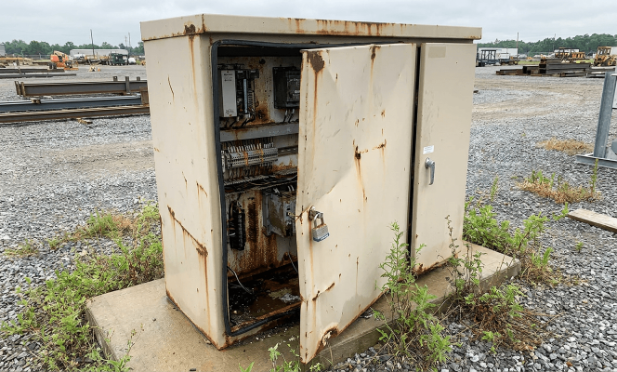
Why an Outdoor Enclosure Failed After Installation — and What Was Missed Before Shipment
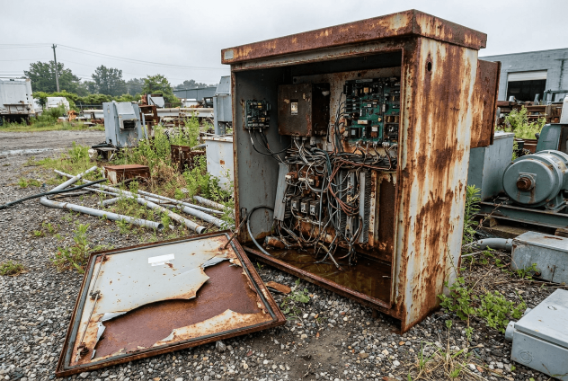
The customer called us less than a month after startup and said the outdoor panel had started behaving strangely. At first, the problem looked like a communication issue because the VFD alarms appeared randomly and the PLC occasionally lost feedback signals from several field devices. Nobody suspected the enclosure itself because the cabinet was a stainless steel NEMA 4X model installed exactly as specified in the project documents.
A week later, the entire system shut down during a rainy afternoon. When the maintenance team opened the enclosure door, water droplets were hanging from the inside roof of the cabinet, and moisture had already formed around the PLC terminals and Ethernet switch. The strange part was that the enclosure door gasket still looked perfect from the outside. Nothing appeared damaged. The cabinet was technically sealed.
That failure ended up becoming one of the most useful lessons we have had in outdoor control panel design because it exposed several environmental problems that had been overlooked before shipment. None of those problems were related to the PLC brand, the VFD manufacturer, or the software itself. The real issue was that the enclosure had been treated as a piece of hardware instead of a complete environmental system.
The Incident: Why a New Outdoor Panel Failed So Quickly
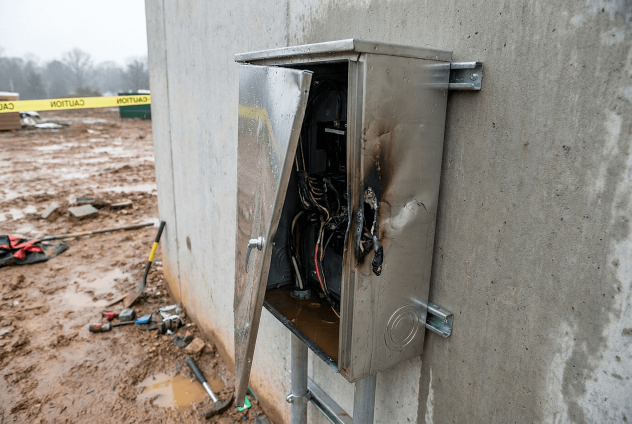
The enclosure was installed beside a wastewater treatment skid in an outdoor process area where the environment changed constantly throughout the day. During the afternoon, the enclosure received several hours of direct sunlight. At night, the surrounding temperature dropped quickly because the installation was located near open process water tanks.
The control panel included:
- PLC controls
- Multiple VFDs
- 24VDC power supplies
- Remote IO modules
- Industrial Ethernet switches
- Modbus TCP communication networks
The panel passed standard FAT testing before shipment. Power distribution worked correctly. IO signals responded normally. The PLC logic behaved properly. Communication with the drives looked stable.
Nothing during factory testing suggested the enclosure would fail after installation.
That is why the customer was frustrated. From their perspective, they had purchased a high-specification outdoor cabinet designed specifically for harsh industrial environments.
What they did not realize was that outdoor enclosure reliability depends heavily on details that often never appear clearly in the quotation or the electrical drawings.
Why Outdoor Panels Usually Fail in Places Nobody Checks
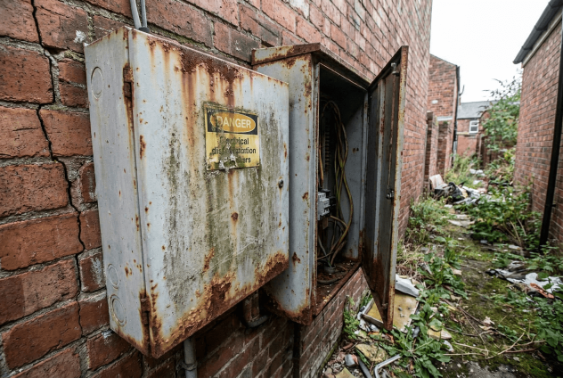
Most people think outdoor enclosure protection starts and ends with the enclosure rating[^1] itself. If the specification says NEMA 4X[^2] or IP66[^3], they assume the cabinet is automatically protected against moisture problems[^4].
That assumption causes a lot of expensive failures.
The enclosure shell is only one part of the protection system. The real weak points usually appear in areas like cable entry points, condensation management, thermal design, pressure equalization, and installation layout.
This project failed because several small environmental problems slowly combined together over time until the enclosure environment became unstable.
The panel did not suddenly “fill with water” overnight. The process happened gradually.
That is why these failures are difficult to catch early.
The First Failure Point It was the cable entry area.
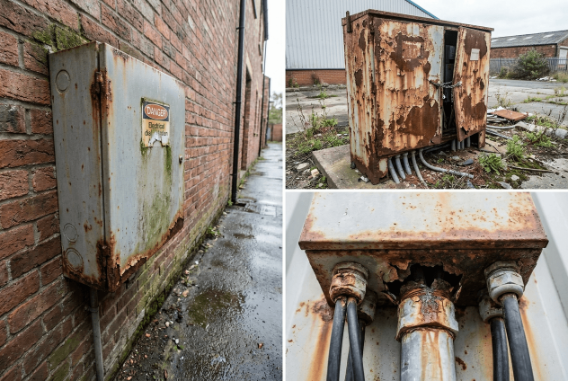
The first thing we inspected onsite was the bottom cable entry section because there were visible moisture marks near the gland plate.
At first glance, the cable glands looked properly installed. Every gland was stainless steel and rated for outdoor use. The problem became obvious only after we traced how the field cables entered the enclosure.
Several cables entered vertically from above without drip loops.
That detail sounds minor, but it matters a lot outdoors because rainwater naturally follows the outer jacket of the cable. Without a drip loop, water slowly travels downward until it reaches the gland opening.
Many people expect water intrusion to happen through obvious gaps or damaged seals. In reality, outdoor enclosure moisture problems are usually slow and subtle. Water follows gravity and surface tension. If cable routing encourages moisture toward the enclosure opening, eventually humidity starts entering the cabinet.
This is exactly what happened here.
Why Drip Loops Matter More Than Most Drawings Show
A proper drip loop forces water to fall away from the cable before reaching the enclosure entry point.
Without a drip loop:
Rainwater follows cable surface
↓
Water reaches gland opening
↓
Moisture slowly enters the enclosure.
With a drip loop:
Cable drops below gland entry point
↓
Water falls from lowest point
↓
Moisture never reaches enclosure opening
The frustrating part is that this problem could have been prevented easily during installation.
Nobody ignored the issue intentionally. The installation team simply focused on getting the cables terminated cleanly and quickly. The environmental effect of the cable routing was never discussed during commissioning.
After this project, we started adding cable routing photos directly into our FAT documentation because many installers assume gland selection alone guarantees waterproof performance.
It does not.
The Most Damaging Problem Was Actually Inside the Enclosure
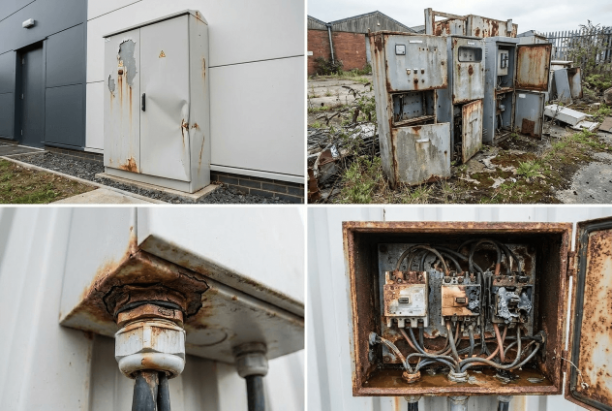
The external moisture entering through the cable glands was only part of the story.
The more serious issue was internal condensation.
This is the part many customers struggle to understand because the enclosure was technically sealed. They assumed a sealed enclosure should automatically stay dry inside.
That is not how outdoor cabinets behave in real environments.
During daytime operation, the VFDs and power supplies generated heat continuously while sunlight increased the enclosure surface temperature even further. Warm air inside the enclosure trapped moisture throughout the afternoon.
Once nighttime arrived, the outside temperature dropped quickly, and the stainless steel enclosure cooled down faster than the trapped air inside the cabinet.
The moisture inside the air then condensed on the cold metal surfaces.
The enclosure effectively started creating its own internal rain cycle.
Field technicians often describe this as the enclosure “sweating inside,” and honestly that description is more useful than the formal engineering terminology because it explains the problem immediately.
The Missing Heater Was More Important Than the Customer Realized
The enclosure did not include an anti-condensation heater because the customer believed heaters were only necessary in cold winter climates.
That misunderstanding is extremely common.
An anti-condensation heater is not designed to heat the equipment for comfort. Its job is to keep the enclosure temperature slightly above the dew point so moisture cannot form on electrical surfaces.
Even a small heater changes the enclosure environment dramatically because it stabilizes temperature swings during overnight cooling.
Without that protection, condensation forms repeatedly on enclosure roofs, door panels, terminal blocks, and communication equipment.
That repeated moisture exposure slowly damages electronics long before catastrophic failure appears.
In this project, the first visible symptom was not a dead PLC. The first symptom was unstable communication behavior caused by moisture forming around the Ethernet switch and IO terminals.
The Thermal Calculation Ignored the Sun Completely
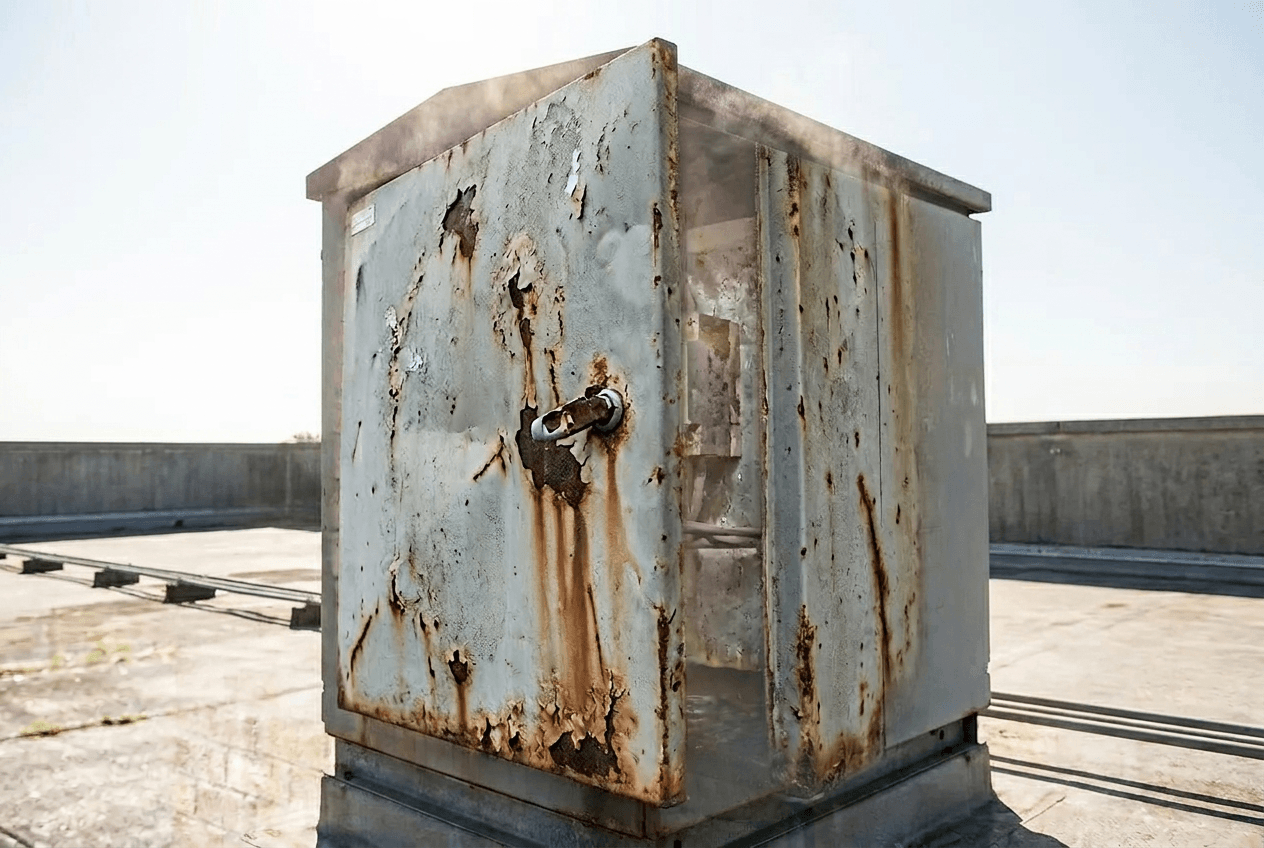
The third problem appeared after we started reviewing the VFD fault history carefully.
Most of the communication alarms and drive warnings happened during the hottest part of the afternoon.
At first, that seemed unrelated to the condensation issue. Then we measured the actual enclosure temperatures onsite.
The results explained everything.
Measurement Location | Temperature |
|---|---|
Outdoor ambient temperature | 36°C |
Enclosure external surface | 49°C |
Upper internal enclosure area | 58°C |
The original thermal calculation only considered the heat generated by the electrical components themselves.
It included:
- VFD heat dissipation
- PLC power consumption
- Power supply losses
But it completely ignored solar heat gain.
That mistake is surprisingly common in outdoor enclosure design because many thermal calculations happen inside offices using ideal ambient temperature assumptions.
Real outdoor environments behave differently.
A stainless steel enclosure sitting in afternoon sunlight can become dramatically hotter than the surrounding air temperature, especially when the enclosure contains high-density VFD installations.
Why the Internal Layout Made the Problem Worse
The enclosure layout also contributed to the overheating problem.
The VFDs were mounted in the lower section of the cabinet while the PLC and communication equipment were mounted near the top.
That arrangement looked perfectly reasonable during panel assembly because it simplified wiring.
Unfortunately, heat naturally rises.
The hot air generated by the drives moved upward through the enclosure and collected around the PLC and Ethernet switch area. During afternoon operation, the communication equipment sat inside the hottest section of the enclosure.
That explains why communication instability appeared before the VFDs themselves started tripping.
The panel was already overheating internally long before operators noticed any serious alarms.
This is why enclosure layout should never be treated as only a space management exercise.
Airflow matters just as much as wiring convenience.
What We Changed After This Failure
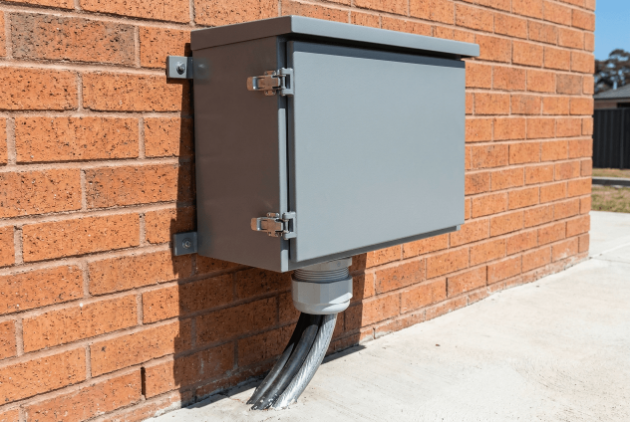
This project forced us to redesign our outdoor enclosure inspection process completely.
Before this incident, our FAT procedures focused mostly on electrical functionality and PLC operation. Environmental survivability received much less attention.
That approach no longer made sense after we saw how quickly environmental problems could destroy an otherwise well-built control panel.
We Now Inspect Cable Entries Differently
Every outdoor enclosure now receives a dedicated cable entry inspection before shipment.
We verify:
- gland torque consistency
- gasket compression
- unused gland sealing
- cable diameter matching
- drip loop preparation guidance
We also document cable entry areas with FAT photos because many water intrusion problems begin there.
We Now Perform Door Seal Compression Checks
One of the simplest but most effective checks we added is something our technicians casually call the “paper test.”
A thin strip of paper gets placed between the gasket and enclosure frame while the door closes.
If the paper pulls out easily from one area, the gasket compression is uneven.
That usually happens near:
- enclosure corners
- hinge areas
- warped mounting surfaces
This simple test identifies sealing weaknesses that are difficult to notice visually.
We Now Treat Condensation as a Primary Design Risk
Before this project, condensation prevention was often treated as an optional upgrade feature.
Now it is considered part of the core enclosure design review.
For every outdoor enclosure, we evaluate:
Environmental Factor | Why It Matters |
|---|---|
Day/night temperature swing | Condensation risk |
Solar exposure duration | Internal heat buildup |
Humidity level | Moisture accumulation |
Internal heat load | Thermal stability |
Ventilation strategy | Pressure equalization |
Depending on the site conditions, the enclosure may require the following:
- anti-condensation heaters
- pressure equalization vents
- drain plugs
- heat exchangers
- closed-loop cooling systems
There is no single outdoor enclosure solution that works for every environment.
That is exactly why standard enclosure ratings alone are never enough.
What Buyers Should Actually Ask Before Purchasing an Outdoor Control Panel
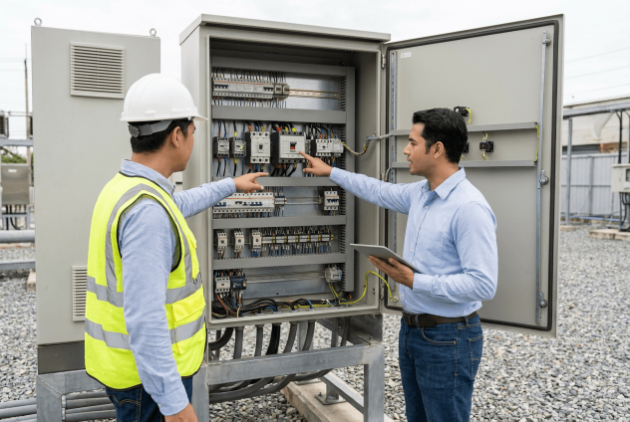
A lot of customers still focus almost entirely on enclosure material and NEMA rating during procurement.
Those things matter, but they are only part of the real reliability picture.
The more useful questions are usually much more practical.
- Ask how the panel builder plans to manage condensation inside the enclosure.
- Ask whether solar heat gain was included in the thermal calculation.
- Ask how cable entries will prevent water tracking during heavy rain exposure.
- Ask whether the FAT process includes environmental inspection instead of only electrical testing.
Those questions usually reveal whether the supplier truly understands outdoor enclosure reliability or is simply assembling hardware according to a specification sheet.
Conclusion
This enclosure did not fail because the PLC was defective or because the enclosure rating was wrong. The failure happened because several small environmental details were ignored before shipment, and those details slowly turned the inside of the cabinet into an unstable operating environment. The cable routing allowed moisture to enter gradually, the enclosure trapped humidity during daily temperature swings, and the thermal design ignored the effect of direct sunlight on internal temperatures.
In the end, the most expensive problems in outdoor automation systems are rarely caused by the most expensive components. They usually begin with small environmental details that nobody takes seriously until the panel starts failing in the field.
FAQ
- Can a NEMA 4X enclosure still leak water?
Yes. This is probably one of the biggest misunderstandings in outdoor control panel design.
A NEMA 4X enclosure only protects the enclosure body itself under specific installation conditions. It does not automatically guarantee that the complete system is protected after cables, glands, vents, cooling devices, and field modifications are added.
In real projects, most water intrusion problems happen because of the following:
- poorly sealed cable entries
- missing drip loops
- damaged door gaskets
- condensation buildup
- incorrect gland sizing
- field-drilled openings without proper sealing
We have seen outdoor panels fail even though the enclosure itself was perfectly manufactured because the weak point was somewhere else in the installation.
- Why does condensation form inside a sealed outdoor enclosure?
A sealed enclosure can still develop internal condensation because humidity already exists inside the trapped air.
During the day, electrical components and sunlight heat the internal air. Warm air can hold more moisture. At night, the enclosure cools down faster than the trapped air inside. Once the internal temperature drops below the dew point, water vapor condenses onto cold metal surfaces.
That is why technicians often describe outdoor panels as “sweating inside.”
This problem becomes more severe in the following:
- water treatment facilities
- coastal environments
- rooftop HVAC systems
- humid climates
- locations with large day/night temperature swings
Condensation is often more dangerous than direct rainwater because it forms directly on sensitive electronics.
- What does an anti-condensation heater actually do?
Many people assume enclosure heaters exist to keep equipment warm during winter.
That is not their primary purpose.
An anti-condensation heater keeps the internal enclosure temperature slightly above the dew point so moisture cannot condense on electrical surfaces.
Even a low-wattage heater can stabilize the enclosure environment significantly.
Without a heater, moisture may repeatedly form on the following:
- PLC terminals
- Ethernet switches
- relay contacts
- VFD control boards
- power supplies
This repeated moisture exposure slowly damages electronics over time and creates intermittent faults that are difficult to diagnose.
- Why do outdoor VFD panels overheat even when the ambient temperature looks acceptable?
Because ambient temperature is only part of the thermal picture.
Many enclosure thermal calculations ignore the following:
- direct sunlight
- enclosure orientation
- poor airflow
- internal heat layering
- surrounding equipment heat
In outdoor environments, enclosure internal temperatures can become much higher than the surrounding air temperatures.
For example, a site with a 36°C ambient temperature may still experience enclosure internal temperatures above 55°C during afternoon sunlight exposure.
This becomes especially dangerous when:
- Multiple VFDs are installed closely together.
- airflow paths are restricted
- Communication devices are mounted above heat-generating equipment.
- no active cooling exists
Heat-related communication faults often appear before complete equipment shutdown happens.
- Why are drip loops important for outdoor cable installations?
A drip loop prevents rainwater from following the cable directly into the enclosure.
Without a drip loop, water naturally travels along the cable jacket and reaches the gland opening. Over time, moisture slowly enters the enclosure even when the gland itself appears tight.
A proper drip loop creates a low point below the enclosure entry so water falls away before reaching the gland.
This is one of the simplest and cheapest ways to improve outdoor enclosure reliability, yet it is frequently ignored during installation.
- What should be included in an outdoor enclosure FAT inspection?
A proper outdoor enclosure FAT should include more than electrical testing.
Environmental protection checks are equally important.
A good FAT process should verify the following:
- cable gland sealing
- gland torque consistency
- door gasket compression
- condensation prevention strategy
- vent installation
- drain functionality
- thermal design review
- enclosure airflow
- environmental labeling
- solar heat exposure assumptions
Many outdoor failures happen because the FAT process only confirms that the PLC powers up and the IO works correctly.
That is not enough for long-term outdoor reliability.
- What is the most commonly overlooked outdoor enclosure problem?
In our experience, condensation management is the most underestimated issue.
Many customers worry about rain entering the enclosure directly, but the real damage often comes from moisture forming internally over time.
The dangerous part is that condensation problems usually start slowly.
At first, operators only see:
- random communication faults
- unstable analog signals
- nuisance alarms
- intermittent device resets
Months later, corrosion and hardware failures begin appearing.
By that point, the enclosure environment has already been unstable for a long time.
- How can buyers evaluate whether a panel builder truly understands outdoor enclosure design?
The easiest way is to ask practical environmental questions instead of only asking about enclosure ratings.
For example:
- How do you prevent condensation inside the cabinet?
- Was solar heat gain included in the thermal calculation?
- How are cable entries protected against water tracking?
- Do you include environmental inspection during FAT?
- What happens if the enclosure experiences rapid temperature swings?
- How do you validate gasket compression before shipment?
A panel builder who truly understands outdoor reliability will answer these questions in detail.
A supplier who only repeats “NEMA 4X” or “IP66” without discussing environmental behavior is usually focusing only on the enclosure specification sheet, not the real operating conditions.